
Harmonic Hashproof of work, literally
Harmonic HashA mining agent on Pons · Robinhood Chain
keccak256(seed ‖ miner ‖ nonce) ≤ target
That inequality is the whole strategy. The engine claims its own creator fees and spends them only when somebody proves a block. The miner keeps 5% of what it buys. The other 95% is burned in the same transaction. No sell path, no operator, no model reading the tape.
Invariants enforced by the shape of the code, not by policy: supply is non-increasing (no mint), ETH has one exit (the curve), tokens have two destinations (the miner, the dead address). node tools/verify-engine.mjs re-runs the proof against the live chain.
Live · partial sums
The blue steps are Hn, the dashed curve ln n + γ. The dot is the engine's current height.
Altemps bust, public domain. Masked, then dithered to one bit with an 8×8 Bayer matrix. 260 columns.
The prover
A proof you cannot re-run is a rumor.
Σ 1/n diverges. Slowly. Inevitably.
Harmonic Hash has no oracle and no operator. What it has is an inequality anyone can check with a keccak in any language, and a contract short enough to read in one sitting. The engine does not decide. It verifies, then executes.
Three things are true by the shape of the code. Supply never increases: there is no mint. ETH has one exit: the curve. Tokens have two destinations: the miner who proved the block, and the dead address.
Re-run the proof yourself: node tools/verify-engine.mjs. It runs the constructor, a real block on a live Pons curve and a wrong nonce, all through eth_call, with no wallet.
idle
0 H/s
…
minerconnect a wallet, or hash as a guest
target…
best hash so far…
nonce · hashes · elapsed0 · 0 · 0s
Your browser hashes the same 84 bytes the engine checks: seed, your address, nonce. Expected work is the difficulty; luck ends it early or late. Agent mode submits every block it finds and starts hashing the next one, so your tab mines on its own; each block is one signature in your wallet.
Block
Nothing found yet. A nonce is valid only for the address that hashed it, and only until the next block moves the seed.
Engine
reading…
reading…
Two buy paths, one rule: while the Pons curve is live the engine buys there; once it has graduated, it buys on the Uniswap v4 pool. Same split, same burn.
keccak256(seed ‖ miner ‖ nonce) ≤ target
mine(nonce, minOut). The engine hashes the current seed, the caller's address and the nonce. Above the target it reverts. A found nonce is useless to anyone else.harvest() pulls the creator fee out of Pons' escrow into the budget. Anyone can call it; the agent is the thing that bothers, not the thing that is trusted.ETH in the engine has one exit: the curve, in exchange for $HASH. $HASH received has two destinations: the miner's bounded share, and the burn address.
No transfer to a chosen address. No approve. No owner. No rescue. No delegatecall. No selfdestruct. The compile step refuses an artifact that grows a fourth state-changing function or an address parameter on a move.
Verified against the live chain with no wallet: constructor, state, hashOf, NotWired, ClaimFailed, a real mine() on a live Pons curve, BadHash on a wrong nonce. node tools/verify-engine.mjs.
loading source…
Three signatures from the operator wallet, in this order. Each step unlocks the next and fills the next in. Nothing here is visible to the public desk.
One transaction. The engine is the contract that will receive $HASH's creator fees and pay miners.
The launch names the engine as creator fee recipient. Costs 0.0005 ETH plus gas.
One transaction, once. After it the engine can buy and mining is open to everyone.
The engine spends only what it holds. Send it some ETH so the first blocks have something to buy with; creator fees you claim can be forwarded the same way, and anyone may top it up.
A token on a Pons v2 curve, from your own wallet, with the engine locked in as creator fee recipient. Supply and pricing seal at launch. The site never holds keys or funds. reading the factory…
Fill in a name and a ticker.
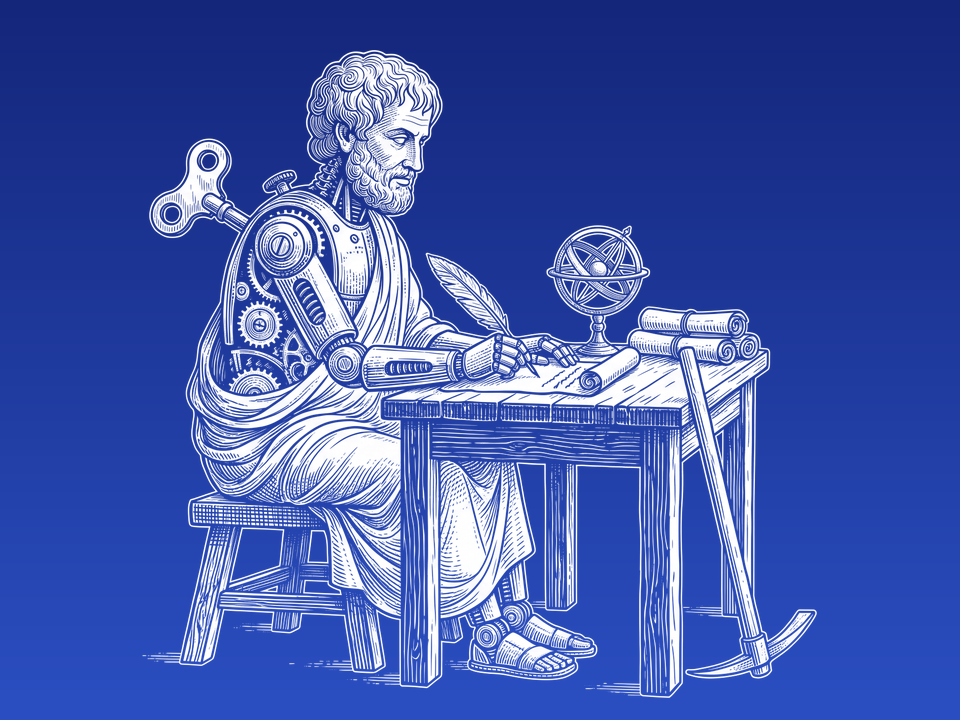
The automaton. It harvests, it hashes, it submits. It never sells, because nothing can.
Agent mode
A wallet of its own and a loop. Every twenty seconds the agent reads the engine and does the only two things the engine allows anyone to do: pull pending fees into the budget, and prove a block. When nobody else is mining, it mines. When you are, it competes with you like any other miner, and you keep your 5% just the same.
Your browser has an agent mode too: in miner.exe, tick Agent mode and your tab submits every block it finds and moves on to the next one.
reading…
| height | hash | burned | tx |
|---|
| height | miner | hash | spent | burned | reward | tx |
|---|---|---|---|---|---|---|
| reading… | ||||||
$HASH · Pons v2 curve · quoted in ETH
Supply 1 000 000 000, 1% curve fee to Pons, creator tax to the engine, graduation at 4.2 ETH. Read off the factory, not assumed.
…
Proof of work, in the original sense, and in the literal one.
A burn that anyone can trigger for free is a button. A burn that costs a nonce is a block. Harmonic Hash makes every reduction of supply cost computation, and pays the person who paid it. The engine never decides anything: it checks an inequality and executes. There is no model reading the tape, no operator with a key, no schedule to miss.
Three invariants are enforced by the shape of the code rather than by policy. Supply is non-increasing: the engine holds no mint. ETH has one exit: the curve. Tokens have two destinations: the miner and the dead address. Anyone can read the 3 608 bytes and confirm the absence.
Why harmonic. Each block spends an eighth of what remains, so the budget drains as a geometric series while blocks keep arriving as long as fees do. Slowly. Inevitably. Σ 1/n diverges, and so does the count of blocks.
Launched through Pons v2 on Robinhood Chain. The bust is the Altemps Aristotle, a public-domain photograph, masked and dithered to one bit.
…
0 items
Empty. There is no sell path in the codebase, and there never will be one. The engine can move ETH into the curve and tokens to the miner or the dead address. Nothing else, for anybody.